
Quantiix
Contact
Choose languageEN
Industrial Machinery & Heavy Equipment

Turn Production Complexityinto Production Control

Know what every job actually takes, get more from your critical machines, and improve on-time delivery of complex orders.

  • Any Machine
  • Any Age
  • No PLC Integration
  • Up to 90 Minutes
See Quantiix in Action
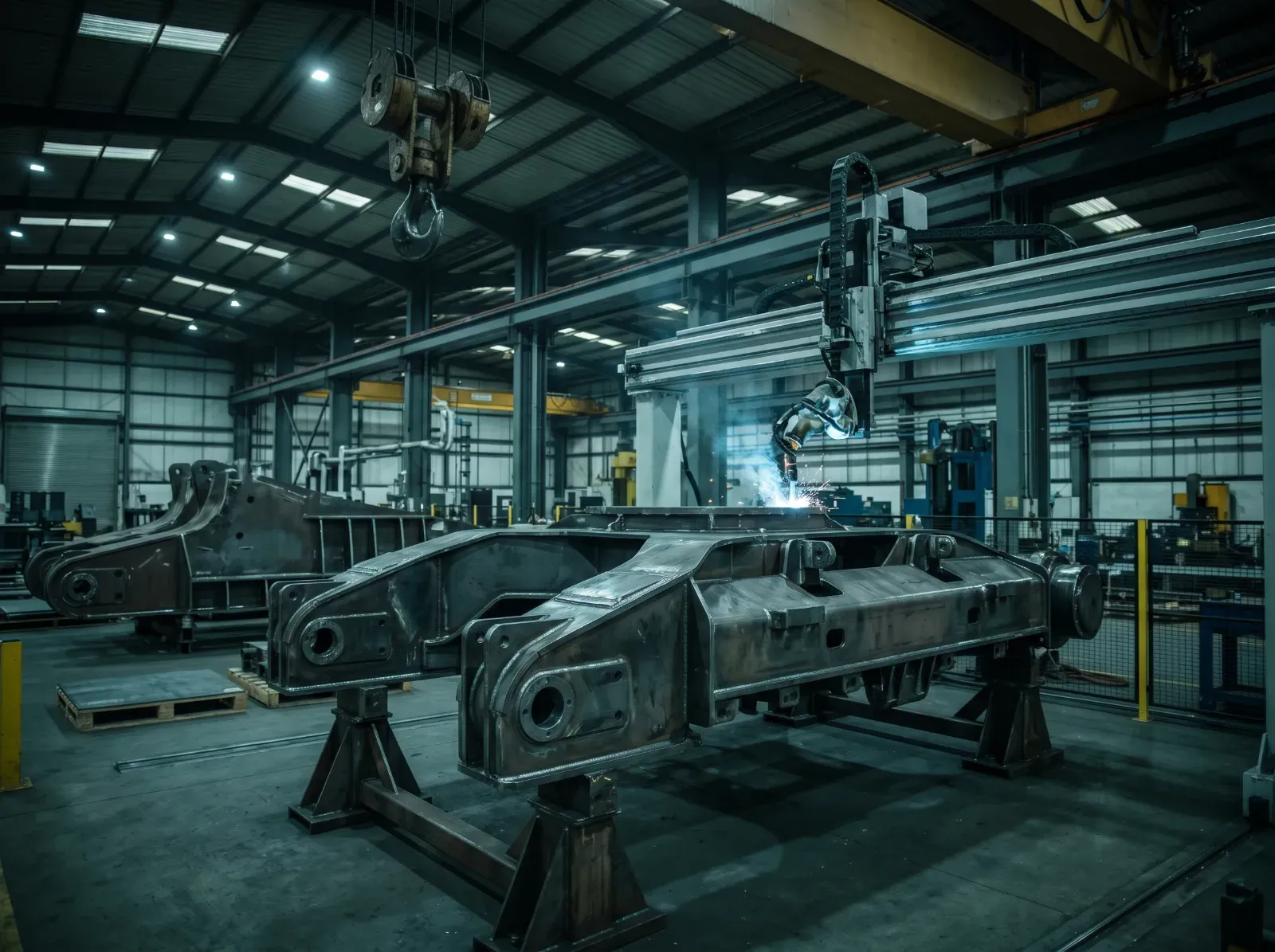
Robotic welding gantry working on a heavy-equipment steel frame under an overhead crane

When Every Order Can Change the Production Picture

Low volumes, custom configurations, complex assemblies, and long cycles mean no two weeks look alike.

A job runs long, a critical machine sits idle while another becomes the bottleneck, and priorities shift again.

Quantiix links actual machine activity to work orders, so you can see how production is running and where production time and capacity are being lost.

Understand What Every Job Really Takes

In high-mix production, planned times and averages don't tell the whole story. Quantiix shows what actually happens at the machine during each job.

  • Reliable Delivery Dates

    Measure actual job run times and use this information to improve production planning and delivery estimates.

  • More from Critical Assets

    See when key machines are running, idle, or stopped, and identify opportunities to recover lost production time.

  • Throughput That Keeps Up with Change

    See where production is constrained as jobs and routings change, and focus improvement efforts where they matter most.

  • OEE with the Story Behind It

    Understand which machine events contribute to availability and performance losses, so improvement efforts focus on the right areas.

  • Performance Measured Fairly

    Measure performance against the hours actually worked, including shift changes, overtime, and urgent orders, so results reflect actual operating conditions.

  • Faster Investigations

    Bring machine-level evidence from the relevant job and production period into production and quality investigations.

Before adding another machine, understand what the machines you already have are actually doing.

Every Machine. One Production Data Layer

Machining, fabrication, and assembly equipment from any manufacturer, any generation, regardless of controller. Quantiix connects non-invasively: no PLC integration, no production stop, and up to 90 minutes per machine.

  • Any Machine
  • Any Age
  • No PLC Integration
  • Up to 90 Minutes

Before You Buy Another Machine

Specialized equipment costs capital, floor space, lead time, and skilled people. Yet a full schedule doesn't mean full utilization; machines still sit idle, wait between jobs, or run below their potential.

Quantiix shows how your critical assets are used, so capex decisions rest on evidence.
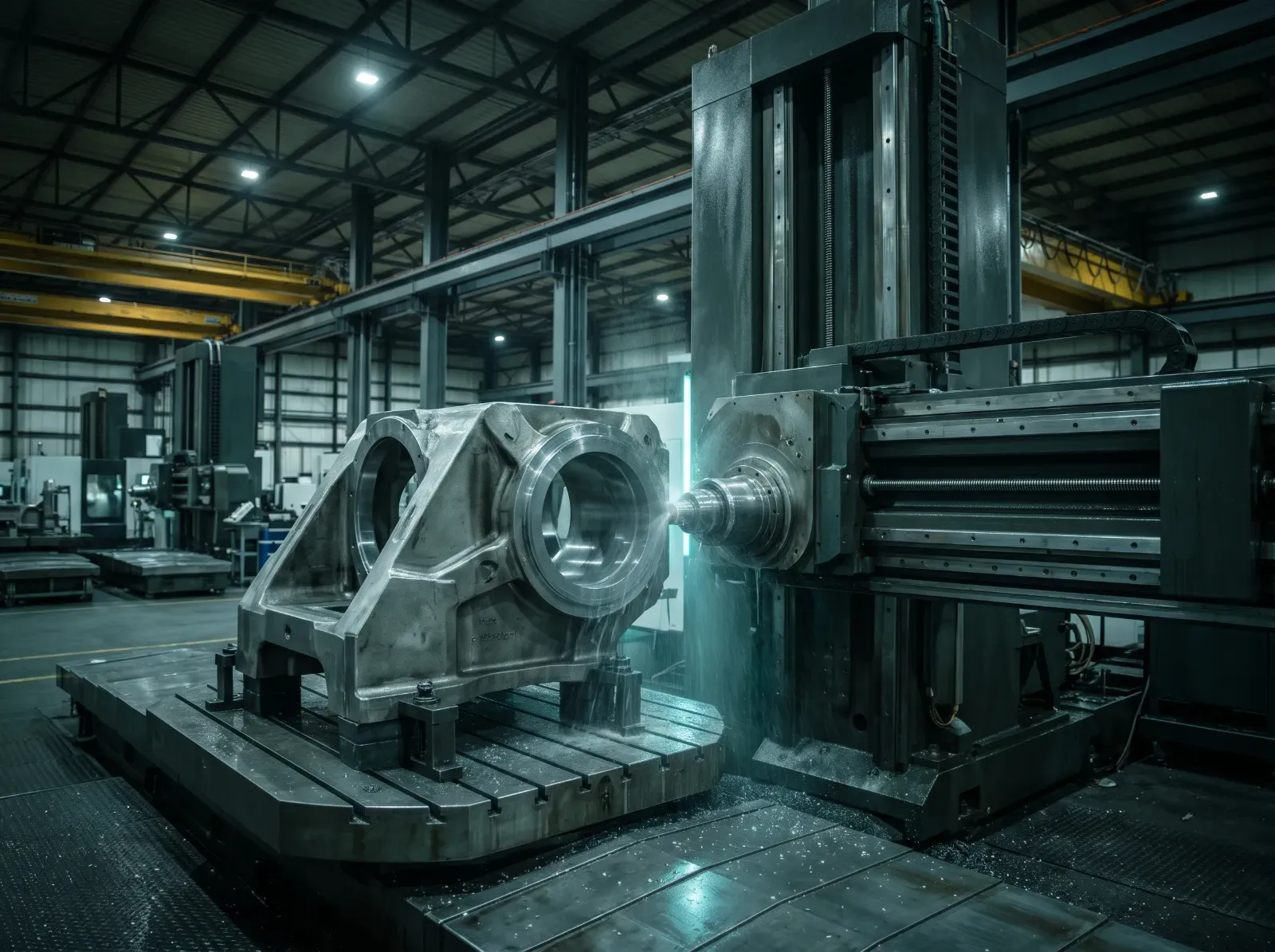
Large horizontal boring mill machining a heavy steel casting
The Path to Physical AI

Value Today. Prediction Next.

Start with real-time visibility and OEE that deliver value today. The same connected data provides the foundation to train AI models on your machines, processes, products, and production patterns.

In high-mix production, where every configuration runs differently, the next step is moving from seeing problems to predicting them: earlier warnings of potential quality issues and machine failures, predictive maintenance, and planning built on real job data.

  1. ConnectAvailable Today
  2. TrainBuilding Toward
  3. PredictBuilding Toward
  4. OptimizeBuilding Toward
Industrial Machinery & Heavy Equipment

Frequently Asked Questions

Talk to Us
Why is production capacity difficult to understand in high-mix, low-volume manufacturing?

Different products and configurations can require different machines, routings, setups, and production times. As production requirements change, utilization and constraints can change with them. Quantiix connects actual machine activity with work orders and production context, helping manufacturers understand how existing capacity is being used across different jobs.

What causes actual production to differ from plan in configure-to-order environments?

Customer-specific configurations, engineering changes, shifting priorities, variable production times, and machine availability can all affect execution. Quantiix connects work orders with actual machine activity, allowing manufacturers to compare planned production with what is physically happening on the shop floor.

Why do bottlenecks change as jobs and product configurations change?

Different jobs can require different machines, routings, and production resources. Quantiix provides visibility into actual machine activity across the production environment, helping manufacturers understand where production is being constrained as different jobs and configurations move through production.

Can a full production schedule still hide unused machine capacity?

Yes. Scheduled machine time and productive machine time are not the same. Quantiix provides actual availability and utilization data, showing when equipment is running, idle, or stopped and helping manufacturers identify productive capacity that may not be visible from the schedule alone.

How can manufacturers determine whether additional production equipment is really needed?

Before adding specialized equipment, manufacturers need to understand how existing assets are actually being used. Quantiix provides machine-level availability and utilization data that can reveal idle periods, stops, and underused machine time, providing operational evidence for capacity-planning decisions.

What can machine data reveal when a job takes longer than planned?

Quantiix connects work orders with actual machine activity, showing when the machine was running, idle, or stopped during the job and how execution compared with the production plan. This provides machine-level evidence about where production time was consumed without assuming the cause of every delay.

Can Quantiix connect legacy and modern equipment across the same production environment?

Yes. Quantiix uses non-invasive current and acoustic sensing and does not require PLC integration, allowing equipment from different manufacturers, generations, and control environments to contribute to the same production data environment.

What role could Physical AI play in Industrial Machinery & Heavy Equipment manufacturing?

Physical AI requires models to understand the specific production environment, including its machines, processes, products, and production patterns. In complex, high-mix manufacturing, that understanding must also account for changing jobs, configurations, and production conditions.

Quantiix's roadmap builds on machine signals and production context, progressing from CONNECT → TRAIN → PREDICT → OPTIMIZE. As predictive capabilities develop, manufacturers will be able to identify potential quality issues and machine failures earlier, supporting predictive maintenance and more advanced production planning based on real production data.

Connect What You Have. Build What Comes Next.

From Machine Signals to Optimized Production.

Talk to Us